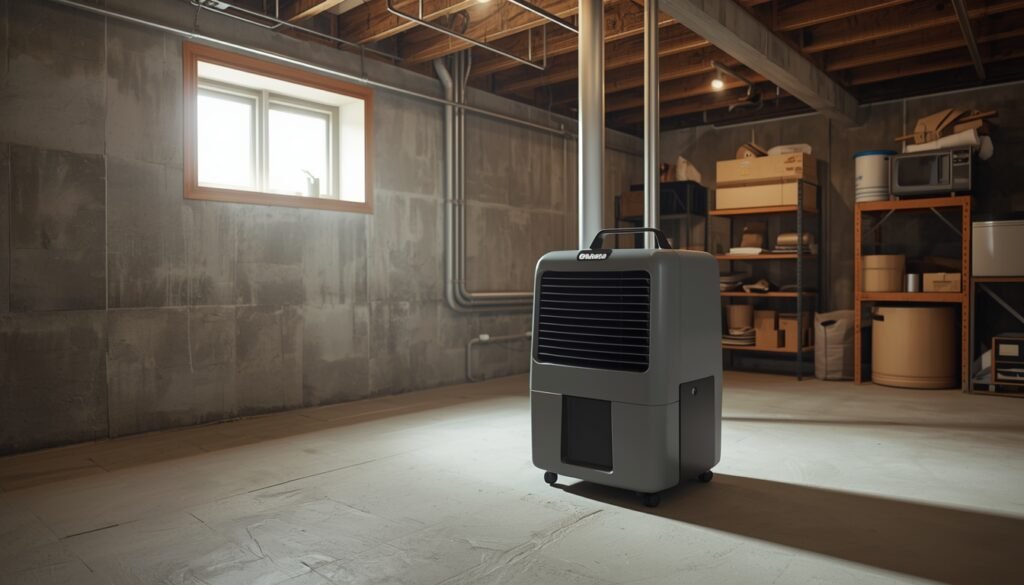
Basements often experience higher humidity levels than the rest of the home because they sit below ground level and are surrounded by moisture-holding soil. Even in homes that appear dry, moisture slowly moves through foundation walls, concrete floors, and humid outdoor air entering through small openings.
Over time this moisture can lead to musty odors, condensation on pipes or windows, and damp storage conditions. A properly sized basement dehumidifier helps control these conditions by removing excess moisture from the air and maintaining a stable indoor humidity level.
This guide explains how basement humidity develops, how dehumidifiers control moisture, and what homeowners should consider when choosing and operating a unit.
Guide to This Site
Why Basements Tend to Develop Humidity Problems
Basements are surrounded by soil that naturally contains moisture. After rainfall or seasonal changes, this moisture can slowly move through foundation walls and floors. Even when the structure is properly built, concrete allows small amounts of moisture vapor to pass through.
Humidity can also enter through outdoor air infiltration. During warm months, humid air entering a cool basement can quickly raise indoor moisture levels.
Common Signs a Basement Has Excess Moisture
- musty or stale odors
- condensation on pipes or windows
- damp cardboard boxes or fabrics
- mold spots appearing on surfaces
- consistently high humidity readings
How Basement Dehumidifiers Remove Moisture
A residential dehumidifier pulls humid air across cold evaporator coils. As the air cools, water vapor condenses and collects in a reservoir or drain line.
This continuous process gradually lowers humidity levels and helps stabilize the indoor environment.
Choosing the Right Dehumidifier Capacity
Dehumidifiers are rated by the amount of moisture they can remove from the air within a 24-hour period. Larger basements or areas with higher humidity levels require units with greater moisture removal capacity.
Choosing the correct capacity ensures the equipment can keep up with the moisture entering the space. If you are unsure how capacity ratings work, see our guide on what size dehumidifier for a basement.
Placement and Airflow Considerations
Where a dehumidifier is placed can influence how effectively it controls moisture. Units should be positioned where air can circulate freely around the intake and exhaust vents.
Basements with multiple rooms or partitions may benefit from placing the unit near the center of the space or in areas where humidity tends to accumulate.
Our guide on the best place to put a basement dehumidifier explains placement strategies in more detail.
Maintaining Stable Basement Humidity
A dehumidifier works best when it is part of a broader moisture control strategy. Improving drainage outside the home, sealing foundation cracks, and maintaining airflow can all help reduce humidity entering the basement.
When these steps are combined with a properly sized dehumidifier, most basements can maintain stable humidity levels that protect stored belongings and improve overall indoor air quality.