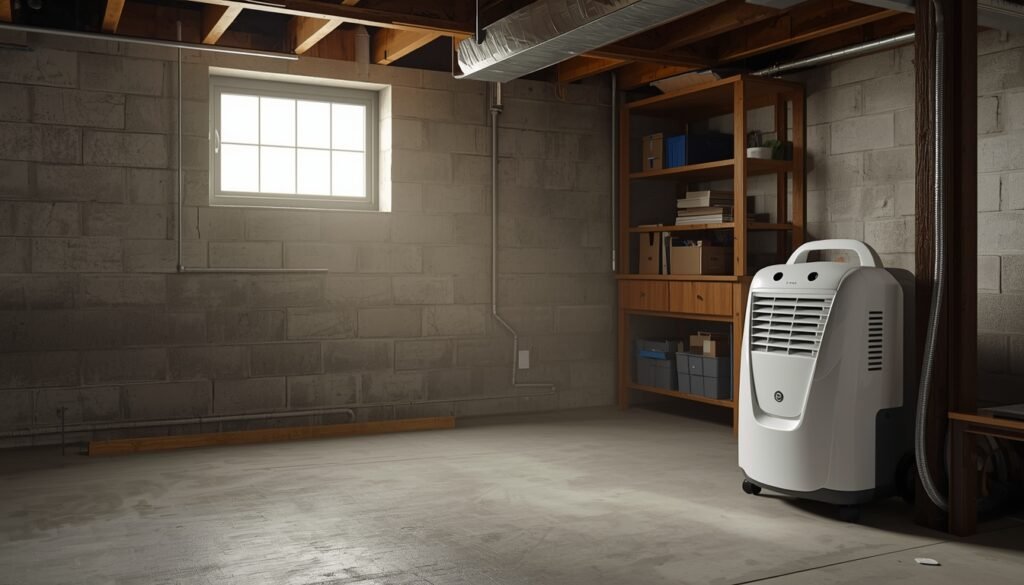
Many homeowners notice that basements often feel more humid than the rest of the home. Even when there is no visible water intrusion, moisture can slowly accumulate in these lower-level spaces and create damp conditions over time.
This happens because basements sit below ground level where surrounding soil naturally contains moisture. As the soil becomes wet from rainfall or seasonal changes, moisture can gradually move through foundation materials and enter the basement environment.
Understanding where basement humidity comes from helps homeowners identify practical ways to control moisture levels and maintain a more comfortable indoor space.
How Moisture Moves Into Basement Spaces
Basement humidity often develops through a combination of environmental factors rather than a single obvious source. Even well-built homes can experience gradual moisture movement through foundation walls and floors.
Concrete, while strong and durable, is slightly porous. This means small amounts of water vapor can pass through the material over time, especially when the surrounding soil contains high levels of moisture.
As this moisture enters the basement air, humidity levels slowly rise unless the space is properly ventilated or actively dehumidified.
Groundwater and Soil Moisture Around Foundations
The soil surrounding a home’s foundation plays a major role in basement humidity. After heavy rain or snowmelt, the ground becomes saturated and holds moisture against the foundation walls.
This moisture can gradually move through tiny pores in the concrete or masonry structure. Over time, the continuous transfer of moisture vapor raises the humidity level inside the basement.
Homes built in areas with high water tables or poor drainage may experience even greater moisture pressure around the foundation.
Humid Outdoor Air Entering the Basement
Another common source of basement humidity is outdoor air infiltration. During warm months, humid air from outside can enter the basement through windows, vents, and small openings around pipes or utility lines.
When this humid air meets the cooler basement environment, moisture in the air can condense on cooler surfaces such as pipes, concrete walls, or storage items.
This process gradually increases humidity levels and can contribute to the damp feeling many basements develop during summer.
Condensation on Cool Basement Surfaces
Basements often remain cooler than the rest of the home because they are surrounded by underground soil. When warm humid air enters the space, moisture may condense on cooler surfaces.
This is similar to the condensation that forms on a cold glass during warm weather. Pipes, foundation walls, and even concrete floors can collect small amounts of moisture through this process.
Over time, repeated condensation can contribute to persistent humidity problems.
Common Signs of Basement Humidity Problems
Homeowners usually recognize humidity issues through small environmental changes that occur over time. These warning signs often appear gradually as moisture levels increase.
- musty or damp odors in enclosed basement areas
- condensation forming on pipes or windows
- damp cardboard boxes or fabrics in storage
- mold spots appearing on walls or furniture
- consistently high humidity readings
When several of these signs appear together, the basement likely has elevated moisture levels that require active humidity control.
How Dehumidifiers Help Control Basement Moisture
A dehumidifier removes excess moisture from the air and helps stabilize humidity levels in enclosed basement spaces. By continuously pulling humid air across cooling coils, the unit condenses water vapor and collects it for removal.
This process gradually reduces humidity and helps prevent condensation, odors, and mold growth.
For a broader explanation of how basement moisture control works, see our basement dehumidifier guide.